

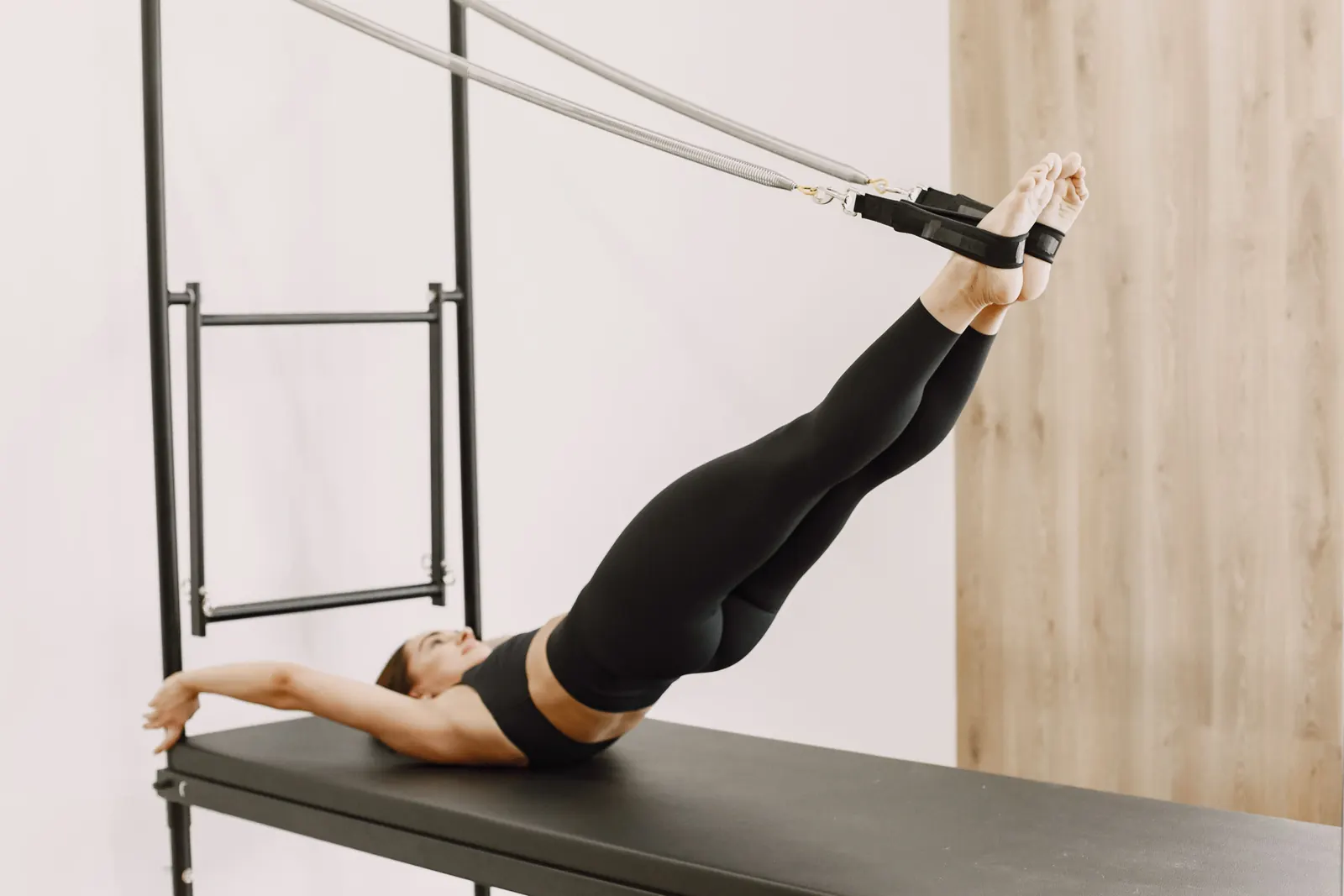
Wear something fitted and stretchy that you can move freely in, and that stays put when you lie down, roll or lift your legs. That’s most of the answer. The rest depends on whether it’s a mat or reformer class, and what the studio asks for.
A quick outfit checklist
- Bottoms: leggings, fitted shorts or fitted joggers. Avoid baggy shorts (they ride up with legs in the air) and anything with zips or rivets that press into you on the mat.
- Top: a fitted T-shirt or tank. Loose tops slide toward your face in bridges and rolling moves, and they hide your alignment from the instructor.
- Support: a comfortable sports bra if you wear one. Low to medium support is usually enough, but go with what’s comfortable.
- Feet: bare feet for mat work, or grip socks. Many reformer studios require grip socks for hygiene and safety. Check before you go.
- Layer: a light top for the start and end of class, when you cool down.
Mat vs reformer
| Mat class | Reformer class | |
|---|---|---|
| Feet | Bare or grip socks | Grip socks often required |
| Clothing to avoid | Very loose tops | Loose fabric and long drawstrings that can catch in springs or the carriage |
| Accessories | Remove large jewellery | Remove rings and watches that can scratch upholstery or catch in straps |
Small details that help
- Hair: a low bun or a high ponytail can be uncomfortable on your back. A low ponytail or braid usually works better.
- Fabric: sweat-wicking fabric is nice for faster classes, but cotton is fine for slow mat sessions.
- Opacity: do a quick squat in front of a mirror. Some leggings turn see-through when stretched.
What to bring
A water bottle, a small towel, grip socks if needed, and your own mat if the studio asks. The full beginner checklist covers props.
