

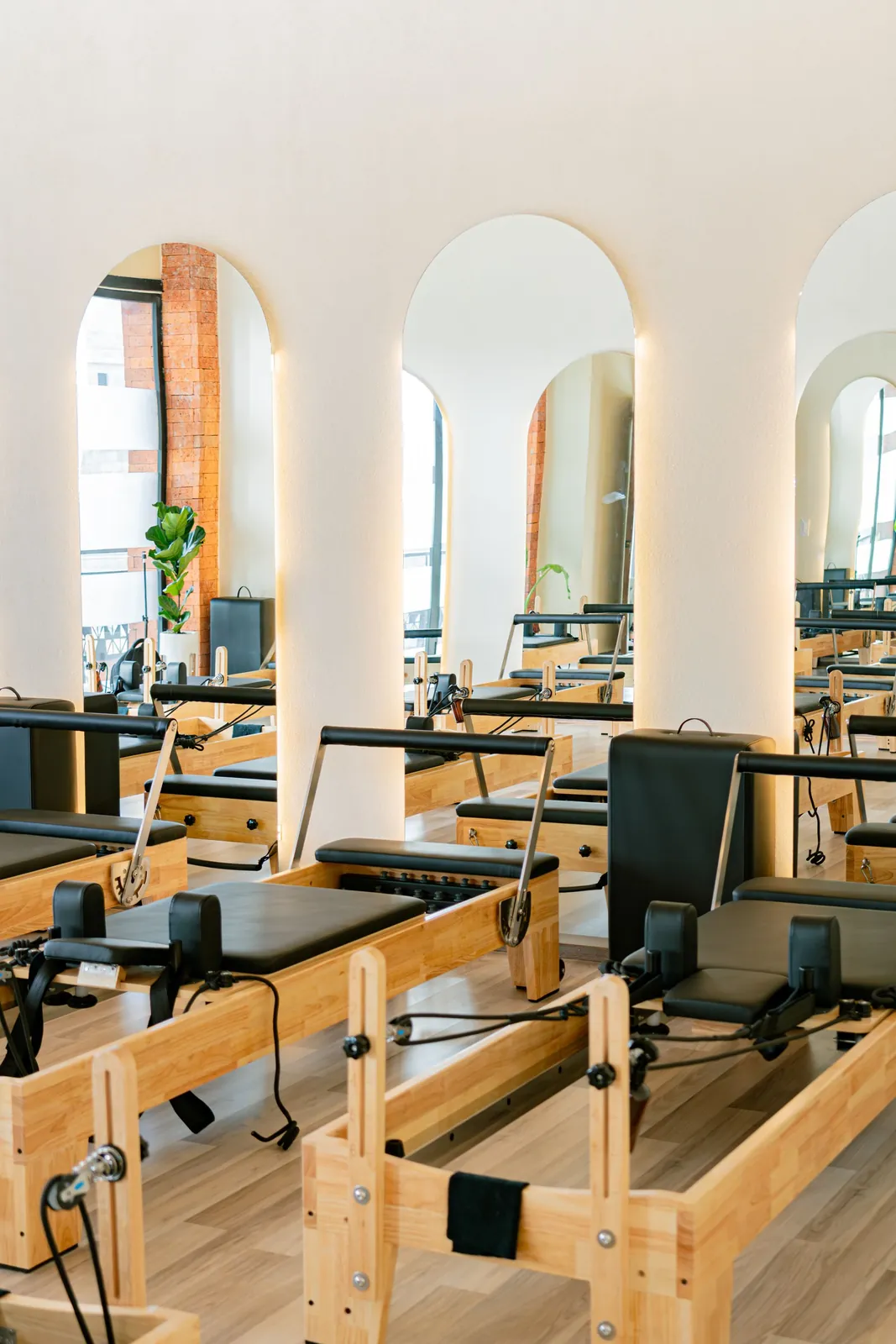
A home reformer can be a great investment if you already love reformer classes and have the room. For a beginner, it’s a lot of money and floor space for something you haven’t tried yet. Here’s an honest look at the pros, the cons, and a few questions to answer before you buy.
Pros
- Convenience: train whenever you like, with no class booking or travel.
- Cost over time: if you’d otherwise pay for several classes a week, a machine can pay for itself, depending on the model and class prices where you live.
- Variety: one machine covers legs, arms, trunk and stretching.
- Privacy: some people prefer to learn without others around.
Cons
- Space: many full-size reformers are well over 2 metres long and need clear space around them. Check the model’s dimensions and use the space checker.
- Cost up front: sturdy home reformers are expensive. Cheap ones can feel shaky and have limited spring options.
- No instructor feedback: spring settings and form are harder to get right alone.
- Weight and moving: they’re heavy and awkward to move between floors.
Questions to ask yourself
- Have I done at least 8 to 10 reformer classes? That’s enough to know you like it and to learn basic set-up.
- Where will it live? Measure the room and the route in (stairs, corners, doors). See storage options.
- How will I learn at home? Many brands offer video classes. Some people mix home sessions with occasional studio classes.
- What’s the warranty and spring replacement policy? Springs wear and should be replaced on the maker’s schedule.
Alternatives to consider
- Mat Pilates with props: a ring, band and soft ball cost very little. See what you need.
- A foldable or compact reformer: less stable and fewer options, but easier to store.
- A Total Gym or similar: different, but some overlap. See Total Gym vs reformer.
Bottom line
Buy a reformer when you know you’ll use it several times a week, have a permanent spot for it, and can learn safely at home. Otherwise, classes and mat work at home are a cheaper way to keep going.
