

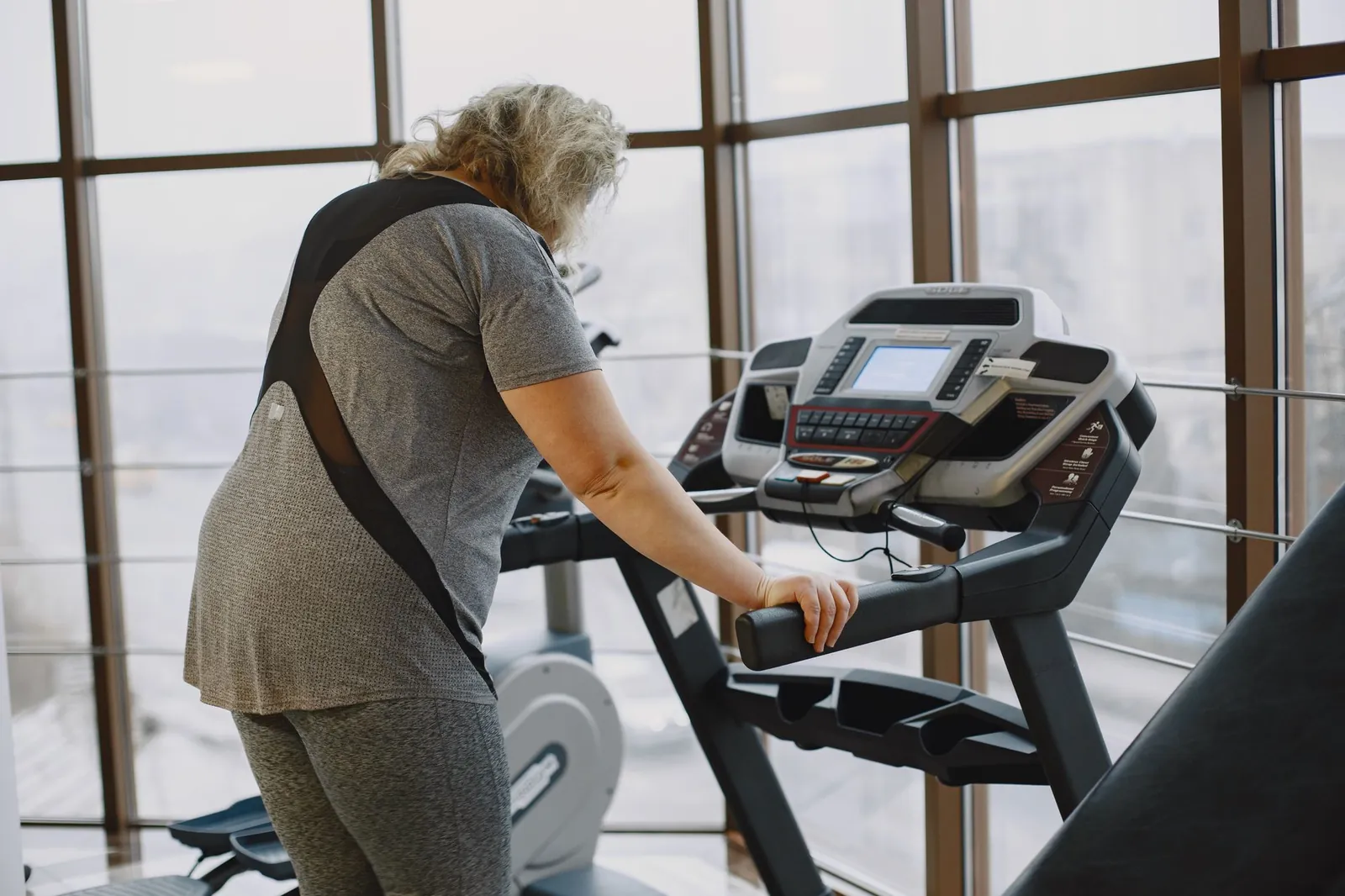
Most treadmill falls happen at the same moments: stepping on or off, looking away, or drifting to the back of the belt. A few habits make them very unlikely. This guide covers the safety key, getting on and off, what to do if you stumble, and keeping kids and pets safe at home.
The five habits
- Clip the safety key on every time. Attach the clip to your waistband, not a loose pocket. If you drift back too far, it pulls out and stops the belt.
- Start from the side rails. Stand on the rails either side of the belt, start the belt slowly, then step on holding the handrails.
- Stay in the middle of the belt. Not so close that you kick the motor hood, not so far back that you’re near the end.
- Look ahead. Turning to look at a TV or behind you is a common cause of drifting off the side.
- Slow down before you step off. Reduce speed, hold the rails, step onto the side rails, then stop the belt.
If you stumble
- Grab the handrails and step your feet onto the side rails.
- Pull the safety key or press stop.
- Don’t try to “catch up” with the belt at speed.
Shoes, clothes and the belt
- Wear trainers with grip. Socks and bare feet slip and offer no protection.
- Avoid long laces, drawstrings and loose trousers that can catch.
- Keep phones, bottles and towels off the console edges where they can fall on the belt.
- A slippery belt may be over-lubricated or loose; see excess oil on the belt and belt adjustment.
Space and set-up
Keep about 2 m clear behind the treadmill and 0.5 m each side, the clearances in the ASTM F2115 standard used in many manuals. See space around a treadmill. Plug it straight into a wall socket and keep the cord out of the way.
Kids and pets
Treadmill belts can cause serious friction burns and finger injuries, especially to young children. Remove the safety key after every use and store it out of reach. Unplug the treadmill if it lives in a shared space, and keep children and pets out of the room while it’s running.
Changing speed and incline
Make changes in small steps, and hold a rail lightly while you press buttons. Big jumps in speed are the moment people lose rhythm. For hands-free walking form, see walking without holding the rails.
