
Close Menu
  • Treadmill
  • Elliptical
  • Pilates
    • Mat and Classes
    • Reformer and Equipment
  • Fix & Maintain
  • Buying & Setup
  • Tools
  • About
    • About the site
    • Ryan Mitchell
    • Contact
    • Privacy Policy
Exercise How ToExercise How To
  • Treadmill
  • Elliptical
  • Pilates
    • Mat and Classes
    • Reformer and Equipment
  • Fix & Maintain
  • Buying & Setup
  • Tools
  • About
    • About the site
    • Ryan Mitchell
    • Contact
    • Privacy Policy
Exercise How ToExercise How To
Home»Pilates»How to Do the Pilates Hundred: Form, Common Mistakes and Modifications
Pilates

How to Do the Pilates Hundred: Form, Common Mistakes and Modifications

Ryan MitchellBy Ryan MitchellMay 29, 2026Updated:October 18, 2026No Comments2 Mins Read
Facebook Twitter LinkedIn WhatsApp Email
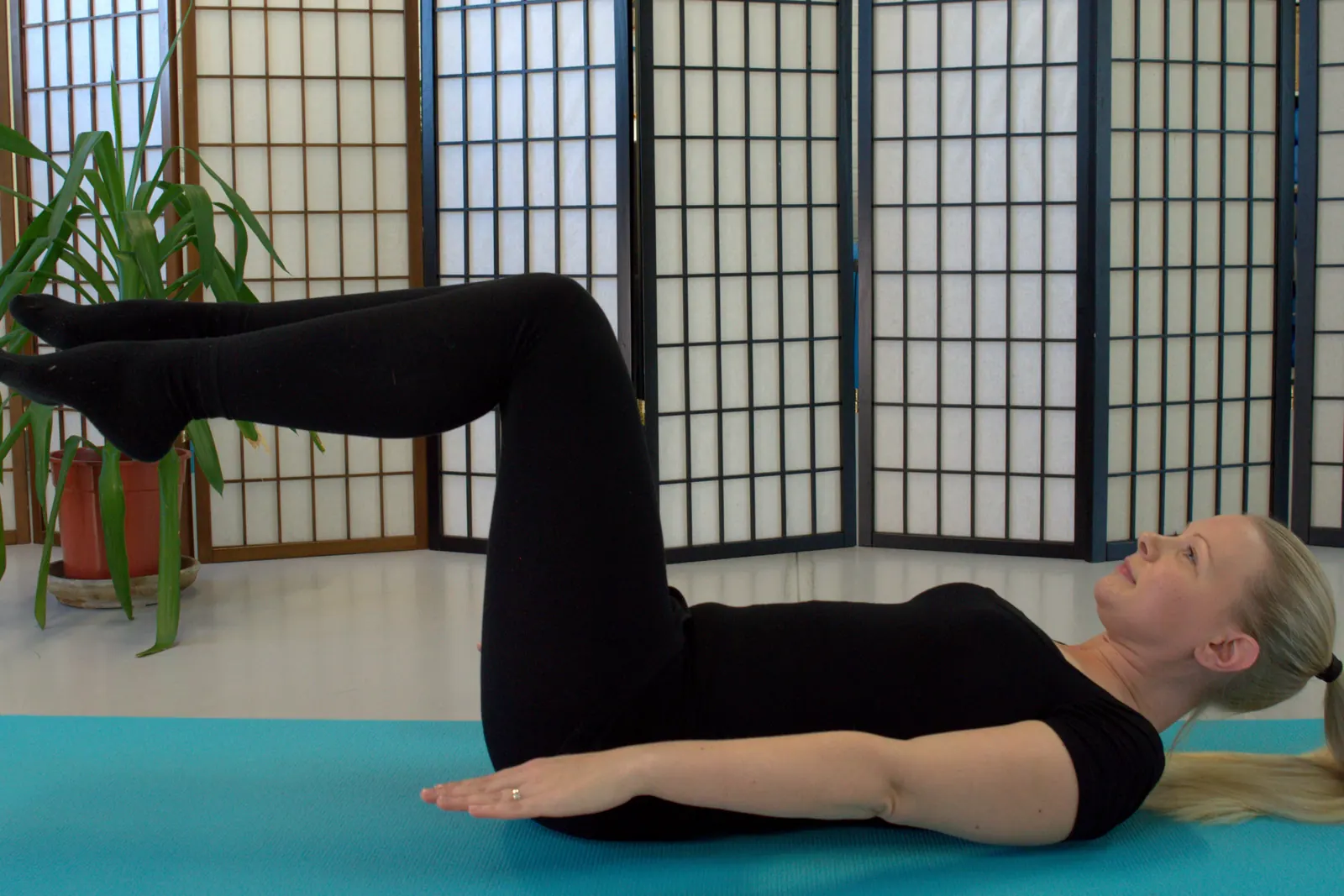
Woman on a mat lifting her legs during a Pilates core exercise
Share
Facebook Twitter LinkedIn WhatsApp Email

Photo: Helisusa, Wikimedia Commons, CC BY-SA 4.0

The Hundred is one of the best-known Pilates moves: you hold a curled-up position and pump your arms for 100 counts while breathing in a steady rhythm. It’s a warm-up in classical Pilates, but it’s harder than it looks. Here’s how to set it up, the common mistakes, and easier versions to build from.

How to do the Hundred

  1. Start on your back with your knees bent and feet on the mat, arms by your sides.
  2. Bring your legs to tabletop: knees over hips, shins parallel to the floor.
  3. Curl up. Breathe out and lift your head and shoulders, looking toward your knees. Reach your arms long, a few centimetres above the mat.
  4. Pump the arms. Make small, brisk up-and-down movements from the shoulders, keeping the arms straight.
  5. Breathe in a rhythm. Breathe in for five pumps, out for five pumps. Ten full breaths makes 100.
  6. Finish with control. Bring your knees toward your chest and lower your head down.

The advanced version straightens the legs to around 45 degrees or lower. Only lower the legs as far as you can without your lower back arching off the mat.

Common mistakes

  • Neck strain. Usually from pulling the chin to the chest or curling too high. Keep a gap the size of a small fist between your chin and chest, and lower your head if it aches.
  • Arching the lower back. A sign your legs are too low or too straight for your strength. Bend your knees or raise your legs.
  • Big, floppy arm swings. Keep the pumps small and controlled, from the shoulders.
  • Holding your breath. Count out loud quietly if it helps.
  • Shoulders up by the ears. Reach your fingertips toward your feet to draw the shoulders down.

Easier versions

LevelHeadLegs
1Down, resting on the matFeet on the mat, knees bent
2DownTabletop
3Curled upFeet on the mat
4Curled upTabletop
5Curled upLegs straight, angled up

You can also split the 100 counts into sets: 50, rest, 50. That’s a good way to keep form clean while you build up.

Who should skip or modify it

People with neck problems, osteoporosis, recent abdominal surgery, or who are pregnant or recently postpartum are often advised to avoid or adapt repeated curling moves. If that’s you, ask an instructor or physiotherapist for an alternative such as head-down versions.

Keep going

  • How to start Pilates
  • A four-week home mat plan
Share. Facebook Twitter LinkedIn WhatsApp Email
Ryan Mitchell
Ryan Mitchell
  • Website

I'm Ryan Mitchell, and I write the guides on Exercise How To: practical help with treadmills, ellipticals and Pilates equipment, from form and workouts to fixes and buying advice. Where numbers matter, I check them against published sources and link to them.

Related Posts

How to Use a Rowing Machine for Pilates: Fusion Moves

November 13, 2026

How to Eliminate Neck Pain in Pilates: Quick Fixes

November 13, 2026

Club Pilates 8-Pack Membership: Pricing and Information

November 13, 2026

Is Pilates or Yoga Better for Weight Loss? Real Results

November 13, 2026

How to Do Pilates Machines: A Beginner’s Reformer Guide

November 13, 2026

Can a Pilates Chair Replace a Reformer? Equipment Facts

November 13, 2026
Add A Comment
Leave A Reply Cancel Reply

Affiliate links

As an Amazon Associate, Exercise How To earns from qualifying purchases. Some links here are affiliate links, at no extra cost to you. Affiliate Disclosure

Ryan Mitchell

Ryan Mitchell

I write the guides here, and where a number matters I link to the source it came from.

How I put guides together

Pilates: good places to start

  • How to Start Pilates: A Beginner’s Guide With a 15-Minute First Routine
  • Your First Pilates Class: What Happens, Words You’ll Hear and How It Feels
  • Pilates at Home for Beginners: A Four-Week Mat Plan
  • How Often Should You Do Pilates? A Weekly Guide by Goal and Level
  • What Do You Need for Pilates? A Beginner’s Checklist
All pilates guides

How many calories was that?

Put in your weight, time and machine settings for a realistic range rather than one exact-looking number.

Open the calculator
Exercise How To

Practical treadmill, elliptical and Pilates guides: form, workouts, fixes and buying advice.

[email protected]

Guides

  • Treadmill
  • Elliptical
  • Pilates
  • Reformer & Equipment
  • Fix & Maintain
  • Buying & Setup

Tools

  • Calorie estimator
  • Pace and speed converter
  • Home gym space checker

Exercise How To

  • About
  • Ryan Mitchell
  • Contact
  • Privacy Policy
  • Affiliate Disclosure
  • Photo Credits

As an Amazon Associate, Exercise How To earns from qualifying purchases. Some links on this site are affiliate links, which can earn us a commission at no extra cost to you. See our Affiliate Disclosure.

© 2026 Exercise How To. General fitness information, not medical advice.

Type above and press Enter to search. Press Esc to cancel.